Verified Emerald dealers & buying guide
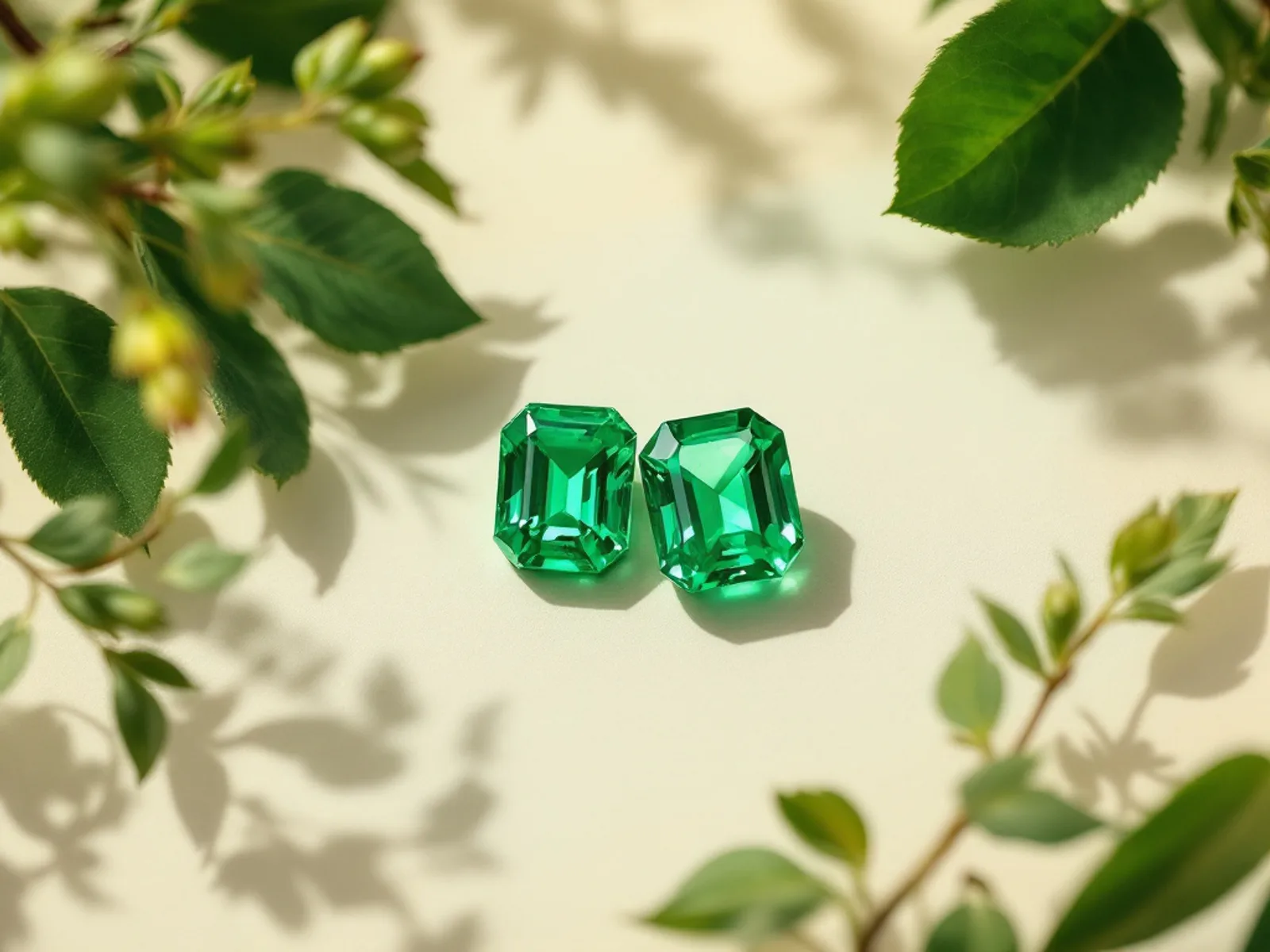
Emerald is green beryl, coloured by chromium, vanadium or both, and nearly every one sold has had oil or resin run into its fractures. That is normal and it is accepted. What is not accepted is silence about how much filler is in there and what it is, because a stone graded "minor" and the same stone graded "significant" can be several multiples apart in price. What follows: Colombia against Zambia, Brazil and Ethiopia; oil against resin; how the none-to-significant scale works and what "no oil" actually requires; and how to buy.
Colour, jardin, and what clean means here
Beryl is beryllium aluminium silicate; chromium and vanadium supply the green. The trade wants a pure to slightly bluish green, strongly saturated, medium in tone. Yellowish, greyish or overly dark stones are marked down. Emerald is a Type III stone, which is a polite way of saying inclusions are expected. The tangle of fractures and crystals inside is called the jardin, and nobody serious expects an emerald to be clean the way a sapphire is clean. What they judge instead is transparency, and whether the colour holds evenly across the face. Emerald is also brittle where fractures reach the surface. Mounted stones are protected by the setting and never go near an ultrasonic.
Colour vocabulary is looser than for ruby or sapphire. "Vivid green" and "intense green" appear on some reports. "Muzo green" and "old mine" are trade phrases, not laboratory grades, and they get attached to a lot of stones that have never been near Muzo. Trapiche emerald, with a six-spoke pattern of carbon inclusions, is a Colombian curiosity that sells on its own terms.
Colombia, Zambia, Brazil, Ethiopia
Colombia is the reference: Muzo, Chivor and Coscuez, plus later mines such as La Pita. The classic Colombian stone runs warm, a slightly yellowish green with high transparency, and for equal quality it fetches the highest price of any origin. Zambia is the cooler counterpart. Kagem and Grizzly, both in the Kafubu area, give slightly bluish greens that are often cleaner and need less filler; Zambia now supplies a large share of the market, and the trade stopped calling it second best some years ago. Brazil, from Minas Gerais and Bahia, gives everything from pale to fine green, much of it lighter and more included. Ethiopia arrived in 2016 with material from Shakiso in the south, some of it very fine and barely filled at all. Afghanistan's Panjshir valley, Pakistan's Swat, Russia and Madagascar also produce.
Origin is an opinion, based on inclusions, chemistry and spectroscopy. Colombian and Afghan stones can look alike under the microscope. Zambian and Brazilian overlap. GIA, Gübelin, SSEF, AGL and GRS all give emerald origin.
Oil, resin, and the enhancement scale
Almost every emerald has its surface-reaching fractures filled, and the question is with what, and how much. Cedarwood oil is the old filler: colourless, inclined to dry out or seep, and renewable at any bench. Resins such as epoxy last longer, resist removal, and in some cases are hardened in place, which is why the trade prices them lower. Then there is green-tinted oil, which adds colour rather than just hiding cracks. That one is treated as a serious undisclosed treatment, and rightly.
Reports name the filler when they can identify it and grade how much of it there is. GIA and AGL use none, insignificant, minor, moderate and significant; Gübelin and SSEF use similar wording. What the grade reflects is how many fractures are filled and how visible they are, and it moves price directly. A stone at minor may be worth several times the same stone at significant. Untreated emerald with fine colour, "no oil" on the report, is rare and priced accordingly. Oil is invisible to the eye and takes minutes to add. So the claim rests entirely on the laboratory, and even then only as of the date on the report; some laboratories note that the stone was cleaned before examination, and nothing stops it being re-oiled the following week. Report date matters as much as wording.
Price, and what to ask
Colour first: saturated pure green with good transparency. Then filling grade, origin, size, clarity. Colombian no-oil or minor-oil stones lead the market; Zambian at the same grade follow; heavily filled or resin-hardened stones sit a long way below. Prices climb sharply past 2 ct and again past 5 ct for fine colour. The cut is usually the rectangular step cut that gave the emerald cut its name, chosen because it protects the corners.
Ask what the stone is filled with, to what degree, what origin the laboratory gives, and how old the report is. Where emerald goes wrong: resin-filled stones described as "oiled"; moderate or significant filling sold as minor; dyed green oil; Zambian or Brazilian stones offered as Colombian with nothing to back it. Have the enhancement line read out and put in writing.
Buying through the register
Every dealer on this page has been checked by GemsVerified for legitimacy, certification practice and disclosure. Each works with recognised laboratories, and each states filler type and degree plainly rather than leaving you to ask.
Ask for the report all the same. Get treatment and origin in writing, and match the report to the stone by weight and measurements. GemsVerified verifies dealers, not individual stones; the report is your evidence for what you have bought.
Verified dealers
View all in directory →No dealers are currently admitted for this page. The catalogue grows as dealers pass verification.
Questions, answered
Almost all. Oil or resin is run into surface-reaching fractures to make them less visible, and the trade accepts that when it is disclosed. Genuinely untreated emerald with fine colour is rare and priced accordingly. Oil cannot be seen by eye, so the type and degree of filling is something only an independent laboratory report can confirm.
"Minor" is a grade of clarity enhancement. It sits above "insignificant" and below "moderate" and "significant", and means the laboratory found only a small amount of filler in a few fractures. The grade bears directly on price. The report should also say whether the filler is oil or a resin, since resin usually costs the stone more.
Fine Zambian emerald is well regarded: typically a slightly bluish green, good clarity, and less filler than a lot of Colombian material. Colombian stones still set the reference price for their warm green and transparency. Compare colour, filling grade and the report rather than the country name, because quality varies enormously inside both origins.
Oil, usually cedarwood, is the older filler. It is colourless, dries out over the years, and can be cleaned out and replaced. Resins such as epoxy last longer but are hard to remove, and some are hardened in place. Reports name the filler where they can identify it. At the same degree of filling, resin knocks more off the value than oil does.
No. Ultrasonic and steam cleaning can drive out oil, crack resin fillers and open existing fractures, and emerald is brittle wherever inclusions reach the surface. Lukewarm water, mild soap and a soft brush is the whole regime. If an oiled stone dries out and the fractures start to show, a jeweller can have it re-oiled.