Verified Tanzanite dealers & buying guide
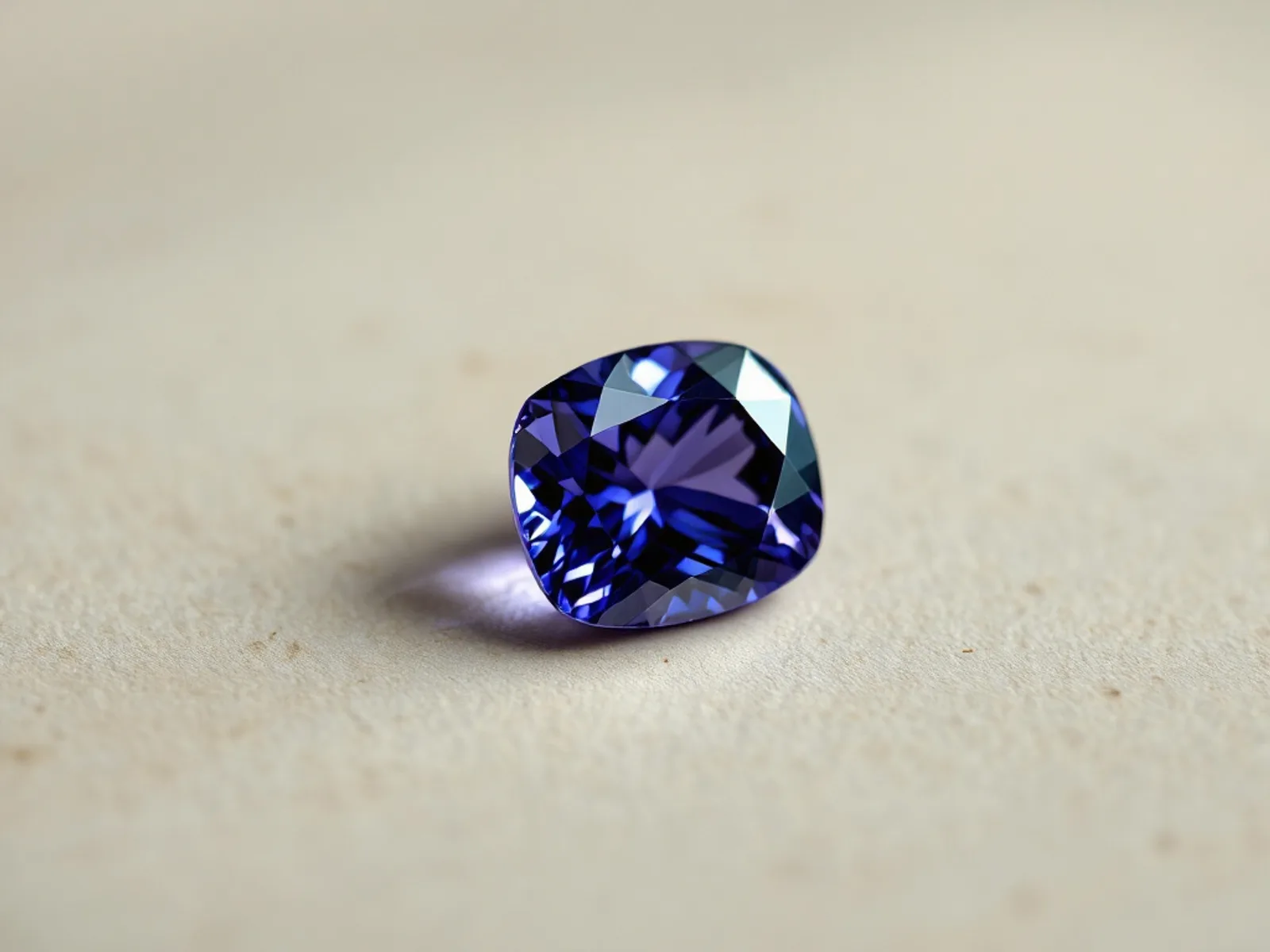
Tanzanite is blue-to-violet zoisite from one strip of ground on earth, the Merelani Hills outside Arusha in northern Tanzania. Nearly all of it is heated. The trade grades it by how blue it faces up, not by where it came from, because there is only one place it could have come from. Below: how the grading language works, why the same stone can look two colours, what heat does and what "unheated" is worth, what a report should say, and how to buy without overpaying for a letter grade.
One deposit, one set of words
The find was 1967, a few kilometres of hillside in sight of Kilimanjaro. Nothing of gem quality has turned up anywhere else in the six decades since, so origin is not a question tanzanite buyers pay for; if a report gives it at all, it says "Tanzania" and moves on. The ground is divided into Blocks A to D. One block belongs to a single large operator, the rest are worked by smaller licensees, and the rough goes out through Arusha to Jaipur, Bangkok and the American market.
Grading is about blueness. Fine stones are called "vivid blue" or "deep blue" with a violet flash. The more purple a stone runs, the lower most markets place it, though a minority of buyers prefer violet and will say so. Tone counts too: very dark stones go dead, very pale ones go grey. Dealers then hang labels on all this, AAA, AA, A, or a house colour scale, and it needs saying plainly that these grades belong to the seller. No laboratory issues them. One dealer's AAA is another's AA. Green-tinted, pink and other "fancy" tanzanite exist and trade as curiosities.
Why the colour moves
Tanzanite is strongly trichroic. Look through one crystal along three directions and you see blue, violet, and a red-brown or yellow-green. Heat kills the brown and leaves the other two, and the cutter then decides which one faces up. Orienting for pure blue wastes more rough than orienting for violet, so blue-faced stones cost more per carat than violet-faced stones of the same weight. That is not marketing. It is yield.
The practical consequence: judge a tanzanite face-up in daylight, then again under an incandescent bulb. Most look bluer by day and more violet under warm light. The stone that stays blue in both is the one the trade prices highest, and the one you should be comparing everything else against.
Heat, and what "unheated" is worth
Almost every tanzanite has been heated to around 500 to 600 degrees Celsius. That converts the brownish and greenish trichroic colours to blue-violet, permanently. Routine, undisputed, no discount. Reports from GIA, Gübelin, SSEF, AIGS, GRS and Lotus usually say "indications of heating", or carry a note that heating is normal for the material and cannot always be told apart from an unheated stone.
A minority of crystals come out of the ground already blue-violet. Sometimes a laboratory can support an unheated claim from particular inclusions or from the residual trichroism; it is not a routine finding, and there is no standard premium for it. An "unheated" tanzanite draws interest at a fair and a shrug at a counter. Coating has appeared on some material to push the colour; laboratories disclose it, it wears off, and a coated stone should be priced as treated beyond heat.
On the report
Under a carat or two, any recognised laboratory confirming natural zoisite will do. For larger or finer stones, GIA, Gübelin, SSEF or AIGS, stating species, variety and treatment, with weight, measurements and photograph that match the stone in your hand. Tanzanite is rarely imitated well, but synthetic forsterite has been sold as tanzanite, and glass and blue-purple synthetic corundum have appeared. Iolite turns up too. Treatment and identity belong on that report, not on the seller's card.
Price and buying
Colour first: saturated blue with violet flash, then violet, then greyish or pale. Size next. Fine colour under 3 ct is easy to find; above 10 ct it thins out, and very large clean stones fetch a real premium per carat. Tanzanite is expected to be eye-clean, so visible inclusions cost. Cut matters for face-up colour, no window, decent symmetry. And the letter grades, again, are seller-defined; compare stones side by side and ignore the labels.
Ask the dealer to describe the colour in plain words: blue, violet-blue or violet. Ask about heat and expect "yes". Ask for a report on anything over a couple of carats. Take the stone to the window and then under a lamp and note the shift. Confirm weight and dimensions against the report. And remember tanzanite is soft for a ring stone, about 6.5 on Mohs, with a cleavage direction; if it is going on a hand that types all day, ask about a protective setting.
Watch for "unheated" with no laboratory support; "AAA" hung on medium violet goods; iolite or synthetic corundum sold as tanzanite; and photographs lit to exaggerate blue.
Buying through the register
Dealers listed on this page have been checked by GemsVerified for legitimacy, certification practice and disclosure. Ask for the laboratory report. Have "heated" written on the invoice. Keep report and invoice together.
GemsVerified verifies dealers, not individual stones. The laboratory report is the record for the stone.
Verified dealers
View all in directory →No dealers are currently admitted for this page. The catalogue grows as dealers pass verification.
Questions, answered
Near enough. Heating to around 500 to 600 degrees Celsius removes the brownish trichroic colour and leaves blue-violet; the result is permanent and the trade treats it as routine. A few crystals come out of the ground blue-violet, and a laboratory can sometimes support that from inclusions, but an unheated claim resting on a seller's word alone should not add a penny.
One place: the Merelani Hills near Arusha in northern Tanzania, found in 1967. No other commercial deposit exists, so origin is not something tanzanite buyers pay for, and a report that mentions it will just say Tanzania. The rough is traded through Arusha and cut mainly in Jaipur, Bangkok and the United States.
Whatever the seller wants it to mean. AAA, AA and A are dealer grades for saturation and blueness within a particular stock, not laboratory standards, so one house's AAA is another's AA. Judge the stone yourself in daylight and under warm light, compare it against others, and use the laboratory report for identity and treatment, not for grade.
With care. It sits around 6.5 on the Mohs scale, has a cleavage direction and dislikes sudden temperature change and ultrasonic cleaners. Pendants and earrings are no problem at all. For a ring, choose a protective setting, keep it away from knocks and take it off for rough work; plenty of people wear tanzanite rings for years without incident.
For small commercial stones a good dealer's invoice is enough. Over a couple of carats, or in fine colour, ask for a report from GIA, Gübelin, SSEF or AIGS stating natural zoisite (tanzanite) and treatment. Check that weight and measurements match the stone, and treat any unheated claim as unverified until the report says otherwise.