Verified Spinel dealers & buying guide
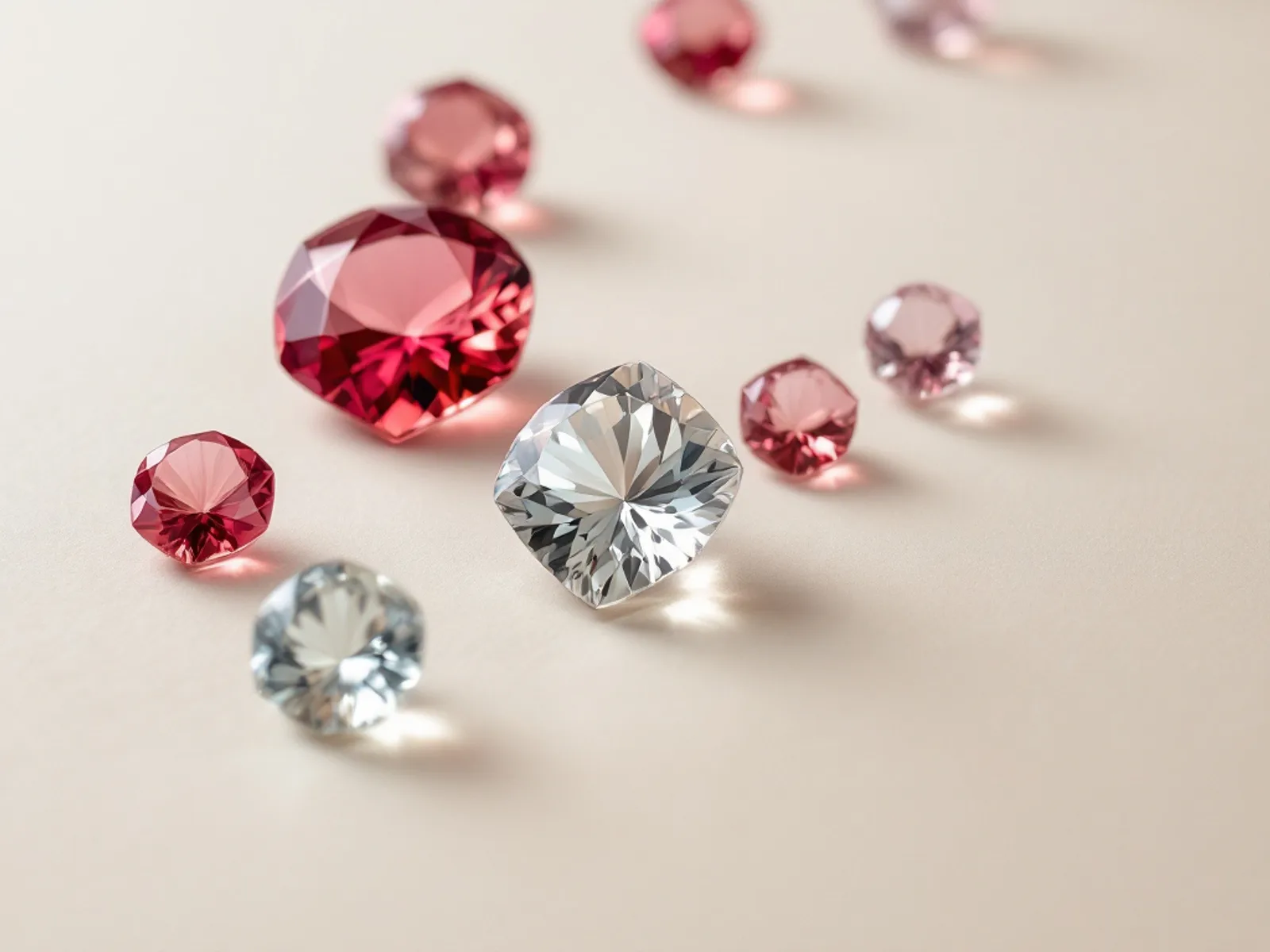
Spinel is magnesium aluminium oxide. It grows in the same marble as ruby and sapphire, which is why for several centuries nobody could tell the red ones from ruby, and why the Black Prince's Ruby in the Imperial State Crown, and the Timur Ruby, are both spinel. It is also one of the very few coloured stones normally sold untreated, and that changes how you buy it. Here: Mahenge, Burma and cobalt spinel; why heat is rare and what to do about the exceptions; and how to buy.
Red, hot pink, cobalt, grey
Spinel comes in red, pink, orange, purple, blue, lavender and grey. It is singly refractive, no pleochroism, so the colour reads the same from every angle. That evenness is a large part of its appeal. Red spinel is the classic: clean red, none of the fluorescent glow of ruby, but excellent brightness. Hot pink, flame and neon are the trade's words for the vivid pinkish red and orangey red that made Mahenge a name. Cobalt spinel is blue from cobalt rather than iron, a vivid, slightly violet blue that iron-bearing grey-blue spinel never quite reaches. Grey spinel was ignored for decades and is now cut and marketed in its own right. Purple and lavender are plentiful and cheap.
Nobody has agreed a spinel equivalent of pigeon's blood. GRS prints "vibrant red" on some reports; several laboratories will print "cobalt blue" or "cobalt spinel" once cobalt is confirmed by chemistry. Ask what colour term, if any, the report gives. "Jedi" is marketing.
Mahenge, Mogok, Luc Yen
Mahenge, in Tanzania's Morogoro region, produced the neon pinks and reds that changed spinel's reputation after a large find in 2007; one crystal weighed over 50 kilos and was cut into a small number of famous stones. Mahenge material is prized for saturation and glow. Large clean pieces are scarce. Burma is the historic red source, from Mogok and from Namya, which gave fine hot pinks in the early 2000s. Luc Yen in northern Vietnam is the main source of cobalt spinel; Sri Lanka gives greyer cobalt-bearing stones, and a little comes from Burma. Sri Lanka also supplies purple, blue and colour-change spinel. The Kuh-i-Lal mine in Tajikistan produced the historic large pink-reds, the Black Prince's among them. Tanzania and Madagascar supply a broad range.
Origin is an opinion, given by GIA, Gübelin, SSEF, AIGS, GRS and Lotus on the strength of inclusions and trace elements. It adds less to spinel prices than to ruby or sapphire. Even so, "Mahenge" and "Burma" both carry a premium for fine red and pink, and cobalt is confirmed by chemistry rather than by mine.
Why spinel is usually untreated, and when it is not
Spinel does not answer to heat the way corundum does. Heating does not dissolve inclusions or shift the colour usefully, and until quite recently there was no commercial reason to try, so a buyer could reasonably assume any spinel was natural in colour. That assumption has frayed at the edges. Since around 2005 some pink and red spinel has been heated at moderate temperature to improve clarity, and laboratories can usually detect it through changes in the chromium spectrum. Reports read "no indications of heating" for spinel just as they do for corundum. Unheated remains the rule. Cobalt-diffused spinel exists. Synthetic spinel is common in older jewellery, especially in blue and colourless, and any laboratory separates synthetic from natural in minutes. Ask anyway.
Price, and what to ask
Colour and saturation lead. Neon Mahenge pinks and reds, pure Mogok reds and confirmed cobalt blues sit at the top; greyish or brownish stones are cheap. Size bites hard above 5 ct for fine reds, and a cobalt blue over 2 ct is a rare thing. Clarity is expected to be good, since spinel usually runs cleaner than ruby. Cutting tends to be precise; the material is hard and takes a good polish.
Ask for a report from a recognised laboratory stating natural spinel, and check that it shows no indications of heating. Ask whether "cobalt" is confirmed by chemistry or only by colour. Where spinel goes wrong is fairly predictable: synthetic spinel sold as natural in older pieces, iron-blue spinel described as cobalt, and heated stones sold without a word on the grounds that "spinel is never treated".
Buying through the register
Every dealer on this page has been checked by GemsVerified for legitimacy, certification practice and disclosure. Each works with recognised laboratories and states treatment plainly, even for a stone that is usually untreated.
Ask for the report anyway. Get treatment and origin in writing, and match the report to the stone by weight and measurements. GemsVerified verifies dealers, not individual stones; the report is your evidence for what you have bought.
Verified dealers
View all in directory →No dealers are currently admitted for this page. The catalogue grows as dealers pass verification.
Questions, answered
Usually not, because it does not respond to heat the way ruby and sapphire do. Since around 2005, though, some pink and red spinel has been heated at moderate temperature to improve clarity, and laboratories can generally detect it. Ask for a report that states "no indications of heating" rather than taking the old rule of thumb on trust.
Spinel from the Morogoro region of Tanzania, where a 2007 find produced vivid neon pink and red stones with a glow the trade had not seen before. The name is used for saturated pink-red spinel from that area and carries a premium. Origin is a laboratory opinion based on inclusions and trace-element chemistry, not on the colour alone.
Blue spinel that gets its colour from cobalt rather than iron: a vivid, slightly violet blue. Most of it comes from Luc Yen in Vietnam; Sri Lanka gives greyer cobalt-bearing stones. Cobalt is confirmed by chemistry, not by looking. Iron-blue spinel gets sold as cobalt often enough that you should ask for the report line that actually says so.
A gemstone in its own right. Spinel is magnesium aluminium oxide and forms alongside ruby in the same marble, which is how so many historic red spinels, the Black Prince's Ruby among them, came to be called rubies. The trade now values fine red, pink and cobalt blue spinel on its own merits, at prices below ruby of similar size.
Ask for an independent laboratory report from GIA, Gübelin, SSEF, AIGS, GRS or Lotus stating natural spinel with no indications of heating. Synthetic spinel is common in older jewellery and a laboratory separates it easily. A dealer's own certificate is a starting point, not confirmation.