Sri Lanka — verified dealers & sourcing guide
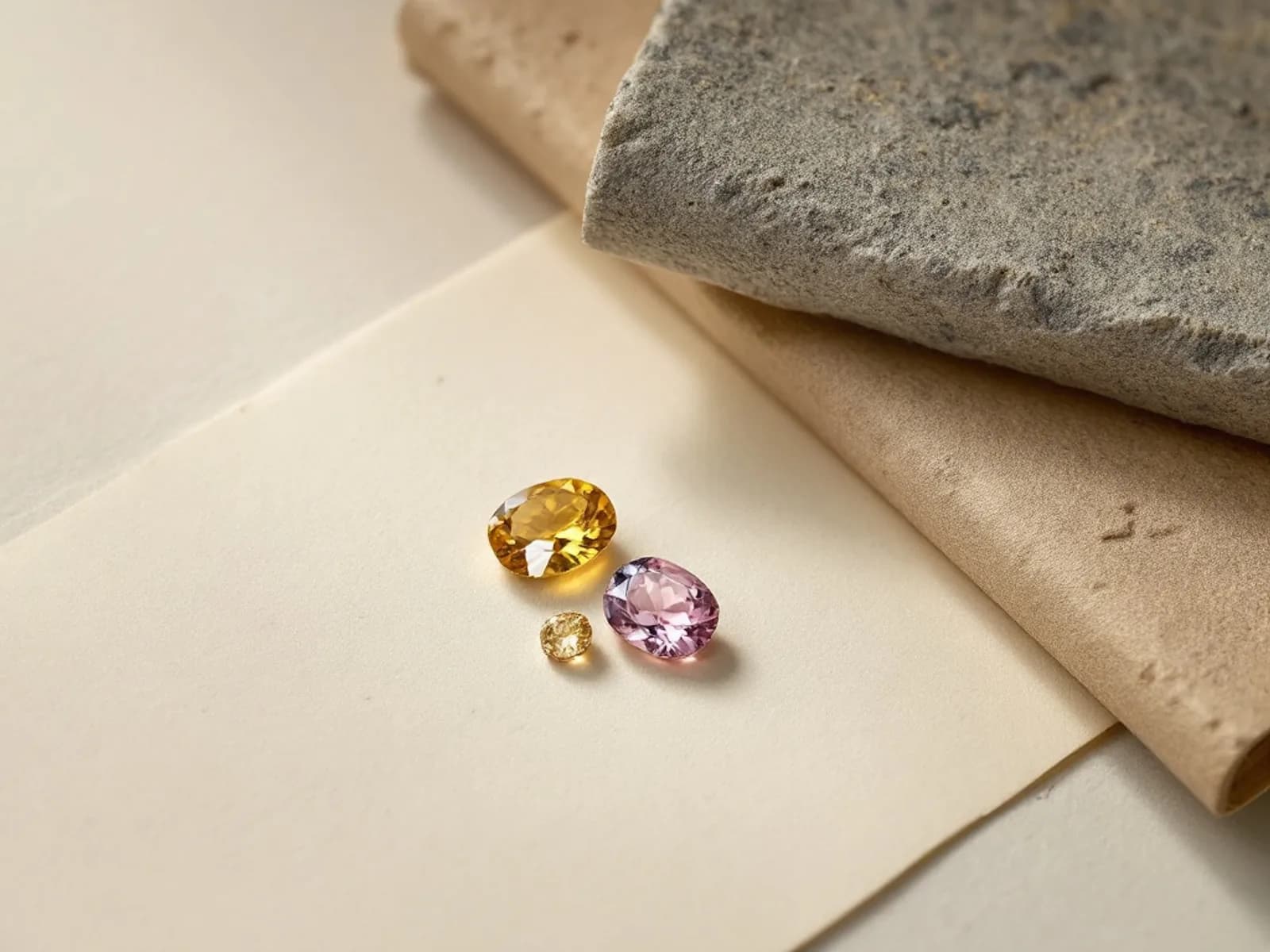
Sri Lanka has mined sapphire for more than two thousand years. "Ceylon sapphire" is still the trade's name for the island's blue, padparadscha and yellow corundum. It is also the classic source of cat's eye chrysoberyl, alexandrite and blue-sheen moonstone. Fine spinel is a growing part of the trade. This page covers the main mining districts and what each is known for. It explains how stones move through Ratnapura, Beruwala and Colombo. It covers how heat is disclosed and how labs decide whether a sapphire is Sri Lankan.
Where Ceylon sapphire comes from
The mining districts
Almost all of Sri Lanka's gems come from the old metamorphic rocks of the Highland Complex. Weathering has broken them down into gem gravels called illam. Miners reach the gravel through hand-dug pits and river workings, not hard-rock mines. That is why the industry stays small-scale and is licensed pit by pit.
- Ratnapura, the "city of gems", is the historic centre. Its gravels yield blue sapphire, padparadscha, yellow sapphire, star sapphire, cat's eye, spinel and garnet.
- Elahera, in the north-central dry zone, opened up in the 1950s. It is known for larger sapphire crystals, milky geuda rough that responds to heat, spinel and chrysoberyl.
- Balangoda and the hill country around it produce blue and yellow sapphire, geuda, and some of the finer unheated blues.
- Other names you will meet on parcels: Okkampitiya, Kataragama, Rakwana, and Meetiyagoda for moonstone.
What the island is known for
Ceylon blue sapphire is prized for a bright, lively blue with high clarity. It ranges from pastel to a medium blue that dealers loosely call cornflower. It is rarely as dark as Australian or Thai stones. It often shows more life than Madagascan stones of the same tone. Padparadscha takes its name from the Sinhalese for lotus blossom and is a soft pink-orange. Labs apply strict colour limits. A stone that is too pink or too orange is simply pink or orange sapphire. Yellow sapphire, sold across South Asia as pukhraj, is best bought unheated.
Beyond corundum, Sri Lanka produces spinel in pink, red, violet and rare cobalt blue. Its alexandrite runs larger than Russian stones but usually with a softer colour change. Honey-coloured cat's eye with a sharp eye is a Ceylon classic. So is blue-sheen moonstone from Meetiyagoda. Zircon, garnet and tourmaline fill out the parcels.
Beruwala and Colombo: how material trades
Rough moves from the pits through brokers to Ratnapura's morning street market. From there it goes to Beruwala on the coast. Its China Fort quarter is the island's main trading and heating centre. Colombo holds the exporters, the larger cutting houses and the National Gem and Jewellery Authority. The Authority licenses the trade and runs testing counters. Two facts matter to a buyer. Sri Lanka imports rough from Madagascar and East Africa for heating and cutting. A stone bought in Beruwala is not always Sri Lankan. And every export passes through the Authority, so a legitimate seller can show you the paperwork.
Treatment, disclosure and lab origin
Heat treatment and disclosure
In the 1970s the trade found that milky geuda rough turns blue in a furnace. That changed Sri Lanka's industry, and most Ceylon sapphire sold today has been heated. Heat is permanent and accepted, but it must be disclosed. Unheated stones carry a large premium at every quality level. GIA, Gübelin, SSEF, AIGS, GRS and Lotus state the finding as "no indications of heating" or "indications of heating". Some also comment on residues or on low-temperature heat. Beryllium diffusion is a separate treatment. It produces orange, yellow and padparadscha-like colours and must be reported as diffusion, not heat. Treat any verbal "no heat" claim as a claim until a lab confirms it.
How labs identify Sri Lankan origin
Origin on a report is an opinion. The lab compares the stone's inclusions, trace-element chemistry and spectra with reference stones of known source. Sri Lankan sapphire is usually low in iron. It often shows long fine silk, liquid fingerprints, negative crystals and zircon inclusions ringed by tension haloes. The hard separation is from Madagascar's Ilakaka deposits, whose geology is closely related. When the evidence overlaps, a lab may decline to give an origin at all. Older reports may say "Ceylon", newer ones "Sri Lanka" or "Sri Lanka (Ceylon)". Both mean the same place.
Buying notes
Ask the dealer three questions. Is it heated, which lab has examined it, and what does the report say about origin. The report should give species and variety, treatment status and, if you are paying for it, an origin opinion. Watch for Madagascan sapphire sold as Ceylon, heated stones sold as unheated, and beryllium-diffused stones described as heated. Pink or orange sapphire sold as padparadscha is another common one. If you buy on the island, have the stone tested before you pay, and check the export paperwork.
Buying through the register
GemsVerified has checked the legitimacy, certification practice and disclosure of every dealer listed on this page. That check covers how a dealer operates, not the stones in any one parcel.
Ask for the laboratory report on any significant purchase. Confirm the treatment status in writing on the invoice. And remember that GemsVerified verifies dealers, not individual stones.
Verified dealers
View all in directory →No dealers are currently admitted for this page. The catalogue grows as dealers pass verification.
Questions, answered
Most of it is. Since the 1970s milky geuda rough has been heated to develop blue, and heated stones make up the bulk of the market. Unheated Ceylon sapphire exists and carries a premium, but only an independent laboratory report stating "no indications of heating" establishes it; a seller's word is not enough.
Yes. Ceylon is the island's colonial-era name and survives as a trade term. Laboratory reports now write "Sri Lanka", sometimes with "(Ceylon)" alongside, and older reports may say "Ceylon" alone. There is no gemmological difference; the term describes origin, not a grade or colour.
By comparing inclusions, trace-element chemistry and absorption spectra against reference stones from each deposit. The two origins share similar geology, so the separation is one of the harder ones. When the evidence overlaps, a laboratory such as GIA, Gübelin or SSEF may state that origin could not be determined rather than guess.
No. Sri Lanka is the classic source, but Madagascar, Tanzania and Vietnam also produce padparadscha, and laboratories apply the same colour standard regardless of origin. Beryllium-diffused sapphire can imitate the colour and must be reported as diffusion treated. The report, not the seller, decides whether a stone qualifies.
Yes, in Ratnapura, Beruwala and Colombo, but with care. Sri Lanka also imports and heats rough from Madagascar and Africa, so not everything on offer is Sri Lankan or unheated. Have the stone tested by a laboratory before paying, and make sure the seller supplies National Gem and Jewellery Authority export paperwork.