Verified Ruby dealers & buying guide
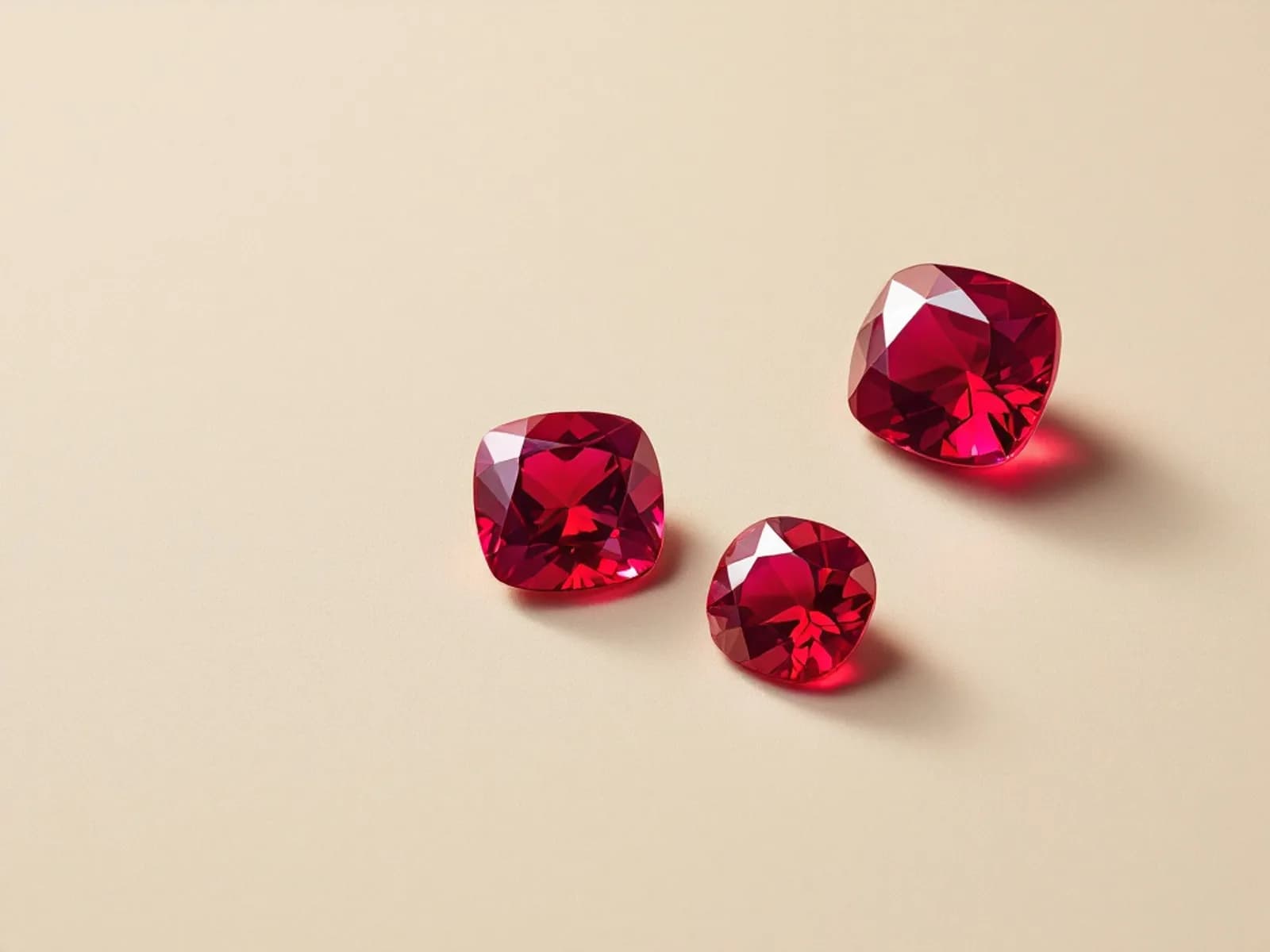
Ruby is red corundum, coloured by chromium, and at the top end it is the most expensive coloured stone per carat that changes hands. Almost every ruby has been heated. A depressing share of the cheap ones has been filled with lead glass. Put a fine unheated Mogok stone beside a glass-filled composite of the same weight and the price gap can be a thousandfold, which is why the treatment line on the report matters more here than for any other gem. This page covers pigeon's blood and the other colour words, Burma against Mozambique and Thailand, how heat and glass filling are written up, and what to pin down before paying.
Pigeon's blood, and what sits below it
Chromium replacing aluminium in the corundum lattice gives red, and more chromium gives both stronger red and stronger red fluorescence. That fluorescence is the point. It is what makes a Burmese ruby look lit from inside in daylight, and it is what iron-rich Thai stones lack. The trade wants pure to slightly purplish red, vivid saturation, medium tone.
Pigeon's blood is the top of that scale: saturated red with a hint of blue, no brown, no orange, glowing under sunlight. The phrase is Burmese in origin and for a long time it simply meant Mogok. GRS, Gübelin, SSEF and Lotus now print it on reports for stones that meet their own colour and quality criteria; Gübelin and SSEF apply it only to unheated stones, GRS also to some heated ones. GIA does not use the term at all. It adds a real premium, so it should come from a laboratory and not from the invoice. Beneath it sit "vivid red", "red" and "purplish red". Below that the material shades into pink sapphire, and where exactly ruby stops and pink sapphire begins is laboratory policy, not physics.
Rubies are included. Clean stones over 2 ct are rare, and fine silk that does not cloud the body is accepted. Eye-visible fractures and dark crystals pull the price down. Star rubies are cut as cabochons and priced on a sharp, centred star over a strongly red body.
Mogok, Montepuez, and the rest
Burma is still the reference. Mogok rubies show strong fluorescence, fine silk and the colour that gave the pigeon's blood term its meaning. Mong Hsu, further east, is another matter. Its stones are darker, with blue cores, and almost all of them go through the furnace. Mozambique is now the biggest source of fine ruby by volume, from Montepuez, found in 2009 and worked at scale from 2012. The best Montepuez stones come close to Burmese colour with less fluorescence and, often, better clarity, and unheated Mozambique material is genuinely available. Thailand and Cambodia supplied iron-rich rubies from the 1970s through the 1990s: darker, flatter, and nearly always heated. Madagascar, Tanzania, Vietnam, Sri Lanka and Greenland also produce ruby. Sri Lankan material runs pink.
Origin is a laboratory opinion drawn from inclusions, trace-element chemistry and spectroscopy. Burmese and Mozambique stones can be hard to tell apart, and laboratories occasionally disagree. Any ruby sold as Burmese needs a report from Gübelin, SSEF, GIA, GRS, AGL or Lotus. A dealer's in-house certificate is a starting point. It is not proof.
Heat, flux, and lead glass
Heating a ruby dissolves silk and takes out purple or brown. It is standard practice, and permanent. Reports read "no indications of heating" or "indications of heating". Some heated stones also show healed fractures holding residues of the flux used in the furnace, and laboratories grade that residue as minor, moderate or significant; significant residue is a serious discount. Fine unheated colour trades at a large premium.
Lead-glass filling is the trap. Heavily fractured, low-grade corundum is heated with lead glass until the glass runs into every crack, and a stone that was opaque rubble becomes transparent red. The glass is soft. A jeweller's torch damages it, so does an ultrasonic bath, so does lemon juice. Laboratories call these "glass filled" or "composite ruby", and some decline to call them ruby at all. Sold honestly they are cheap and useful. Sold as heated natural ruby they are fraud. Under 10x magnification look for gas bubbles and a blue or orange flash along the fractures. Dye and old-fashioned oil filling still turn up too.
Price, and what to ask
Colour beats everything. More vivid, less brown, less purple: higher price. Then origin, in the order unheated Burma, unheated Mozambique, then heated stones in the same order. Size is steep. Clean rubies over 3 ct are scarce, and a fine unheated Burmese 5 ct is an auction lot rather than a shop stone. Clarity and cutting follow. Stones cut in Burma and Thailand are often lumpy, kept deep to save weight, and face up smaller than their carat suggests.
Ask four things: is it heated, is it glass filled, what origin does the laboratory give, and which laboratory. Then read the treatment line to the end. The headline says "natural ruby"; the small print is where the lead glass lives. Rubies go wrong in the same few ways. Composites sold as natural ruby. Heated stones sold as unheated. "Burma-type" or "Mogok colour" language that hints at an origin nobody has confirmed. And pigeon's blood written on the invoice with no report behind it.
Buying through the register
Every dealer on this page has been checked by GemsVerified for legitimacy, certification practice and disclosure, and each works with recognised laboratories and states heat and filling plainly.
Ask for the report. Get treatment and origin in writing. Match the report to the stone by weight and measurements. GemsVerified verifies dealers, not individual stones. Afterwards, the report is what stands between you and an argument.
Verified dealers
View all in directory →No dealers are currently admitted for this page. The catalogue grows as dealers pass verification.
Questions, answered
It is a colour grade for the finest rubies: vivid saturated red with a slight blue undertone and strong fluorescence, no brown, no orange. GRS, Gübelin, SSEF and Lotus print it for stones meeting their criteria; Gübelin and SSEF only for unheated stones. GIA does not use it. Treat the phrase as meaningful only when a laboratory has written it.
By eye, you cannot, and neither can most dealers with any reliability. Laboratories give an origin opinion from inclusions, trace-element chemistry and spectroscopy, and even then Burmese and Mozambique stones can be hard to separate. Any ruby sold as Burmese should carry an independent report from Gübelin, SSEF, GIA, GRS, AGL or Lotus stating the origin.
Nearly all. Heat improves colour and clarity, and the trade accepts it once disclosed. Fine unheated rubies are the exception and carry a strong premium. The report will read "no indications of heating" or "indications of heating"; some heated stones also show flux residue in healed fractures, which the laboratory grades as minor, moderate or significant.
Low-grade, heavily fractured corundum whose cracks have been filled with lead glass so it looks transparent. The glass is soft and can be damaged by a torch, an ultrasonic cleaner or household acids, and the stone is worth a small fraction of natural ruby. It has to be disclosed, and reports describe it as glass filled or composite.
The best Mozambique rubies come close to Burmese colour, are often cleaner, and unheated stones are far easier to find. Burmese rubies still fetch more for equal quality on the strength of fluorescence, history and scarcity. Judge the stone on colour, treatment and the laboratory report rather than on the country printed beside it.